
Tony Blair Institute offered to develop a dataset for prioritizing mine-contaminated areas
November 12, 2025
The United Nations Development Programme (UNDP) in Ukraine, in partnership with the Ministry of Economy, Environment and Agriculture of Ukraine and other key mine action stakeholders, announced the creation of the first multi-agency national group of instructors.
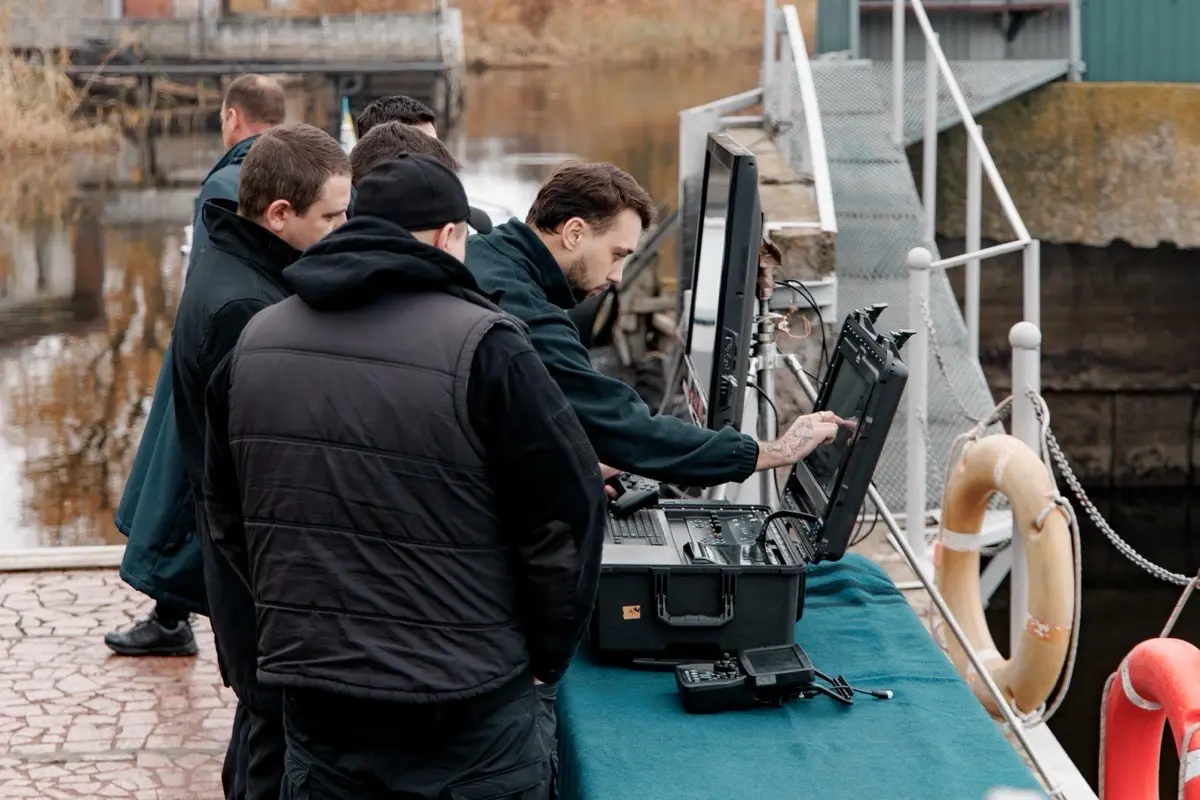
It consists of 15 instructors operating underwater remote-controlled vehicles. The specialists, who recently completed the pilot training course, represent the State Emergency Service, the State Special Transport Service, the National Police of Ukraine, and the National Mine Action Authority.
It is these 15 instructors who, armed with acquired knowledge, will prepare future operators of Deep Trekker Revolution remote-controlled underwater vehicles. This significantly expands the country's capabilities to clear crucial water bodies, such as canals and rivers.
"The Black Sea and the Ukrainian part of the Danube Delta are vital waterways for Ukrainian grain exports. And global food security depends on whether we can use them or not. Preparing such specialists enhances Ukraine's capacities to protect critical infrastructure, export logistics, and return water bodies to safe usage – particularly for irrigating fields in southern Ukraine," stated Deputy Minister of Economy, Environment and Agriculture of Ukraine Ihor Bezkaravainyi.
It is estimated that 13,500 square kilometers of Ukraine's water territories, namely the Dnipro River, lakes, and the Black Sea coast, are potentially contaminated with explosive remnants of war. Since the start of the full-scale invasion, SES divers have cleared 190 square kilometers and removed more than 2,800 explosive items, which constitutes only 1.41 percent of the total contaminated area.
"Modern humanitarian demining is impossible without innovations. Utilizing remote-controlled underwater vehicles — is not just a technical upgrade; it's a change in the security philosophy. Such technologies make it possible to perform complex tasks underwater with minimal risk for our specialists and with maximum efficiency. We are grateful to UNDP and international partners for their systematic support — for the fact that they not only supply equipment but help form an expert community capable of training others and scaling this knowledge across all regions of Ukraine. This is an investment in the safe future of our people and in the recovery of the country after the war," said Serhii Reva, Director of the Mine Actions Department.
Deep Trekker Revolution remote-controlled vehicle systems allow for safely locating and identifying munitions at a depth of up to 300 meters, overcoming serious operational challenges such as zero visibility, strong currents, and severe siltation – conditions that make traditional underwater operations extremely dangerous.
"The technology of remote-controlled vehicles fundamentally alters the approach to underwater demining," noted Yevhen Radchenko, an underwater sapper and SES instructor who participated in the course. "Under conditions of near-zero visibility and strong currents, we can now employ these robots to safely search for and identify explosive devices before divers plunge into the water. This is not merely a matter of efficiency – it is a matter of our people's safety."
The organization of the training and the supply of equipment became possible thanks to the financial support of the governments of the Netherlands, Sweden, Spain, and Luxembourg.
"The Netherlands is proud to support the Mine Action Programme alongside Ukraine and other donor partners," said Robert Dekker, Head of the Political Department and Counsellor of the Embassy of the Kingdom of the Netherlands. "Clearing these waterways is a humanitarian imperative and a condition for lasting peace and recovery. This initiative exemplifies how targeted technical assistance from international and national actors can squarely enhance the security and resilience of the Ukrainian people."
Rana El-Hout, Senior Advisor and Head of the Policy and Programme Coherence Unit at UNDP in Ukraine, underlined that the programme is focused on long-term sustainability.
"This train-the-trainer programme represents a paradigm shift, as it goes beyond simple equipment provision or technological expertise – it is about developing institutional capacity, self-sufficiency, and national ownership," El-Hout emphasized. "Through coordination at the national level, Ukraine can assure consistent implementation and long-term sustainability across all primary state institutions. This is a strategic investment into Ukraine's future, equipping the country to execute long-term demining measures effectively and safely."
As part of the mine action programme aimed at neutralizing mines and unexploded ordnance, UNDP is developing national standards, providing specialized equipment, and supporting capacity building within the demining sector across Ukraine. The organization expects to deliver a total of 60 Deep Trekker Revolution underwater vehicles to national operators by late 2026, setting the foundation for expediting the demining process in Ukraine.