
How compensation for demining agricultural land works: new explanatory video
December 5, 2025
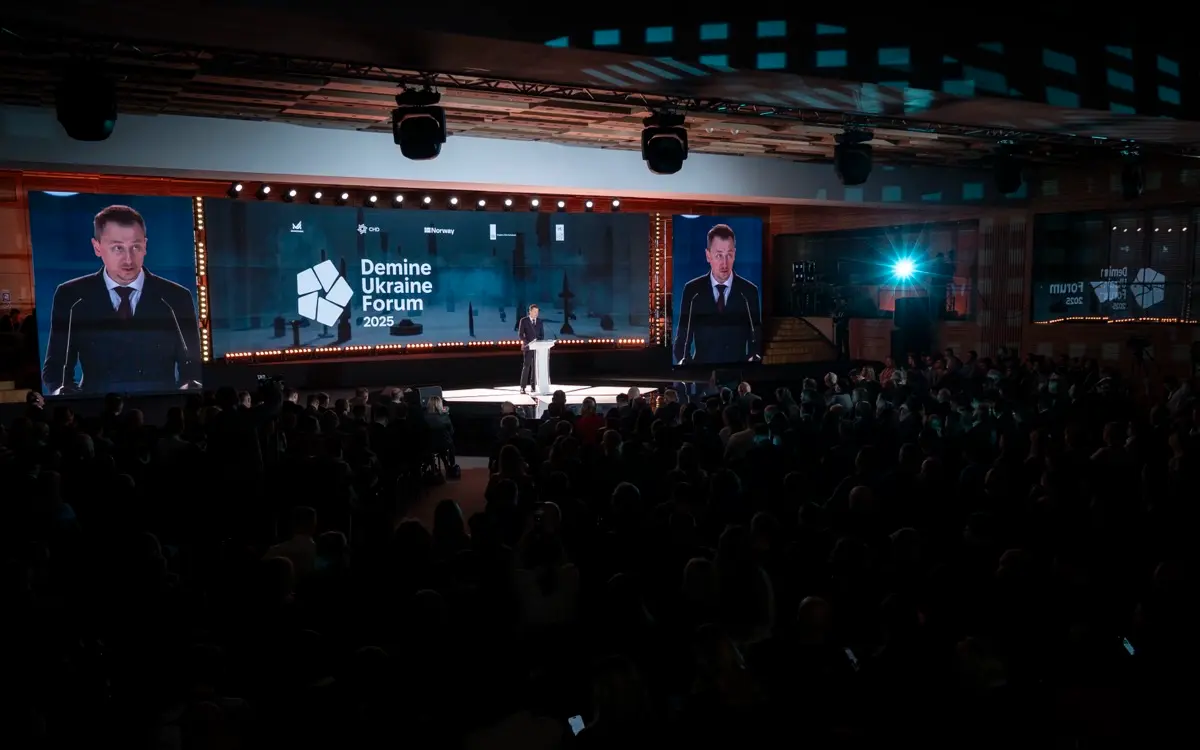
The third annual concluding event on humanitarian demining of Ukraine, the Demine Ukraine Forum, gathered over 500 representatives of the government, manufacturers, innovators, non-governmental organizations, and international partners in Kyiv today, December 5.
The event was opened by the Minister of Economy, Environment and Agriculture, Oleksii Sobolev, who emphasized that within the framework of the state program to compensate demining costs, almost 10 thousand hectares of agricultural land have been returned to farmers. And expanding the program to households, and eventually to Land Bank plots, will allow accelerating the pace of demining agricultural lands.
"By the end of the year, we will reach the 2024 targets, despite the fact that the forecast for this year was not very favorable. And what is important, farmers harvested part of the crop on territories that had already been demined. And in the Kharkiv, Sumy, and Chernihiv regions, which have been affected by the war, the harvested crop is even larger than last year," noted Oleksii Sobolev.
The support of international partners, whose contribution to humanitarian demining has reached one and a half billion in dollar equivalent, is very important for Ukraine. The greatest support for demining programs was provided by the USA, the Howard Buffett Foundation, Switzerland, Norway, Germany, the EU, the Netherlands, Sweden, Japan, and France. This applies to both already implemented projects and those planned to be completed by 2030.
The UNDP Resident Representative in Ukraine, Auke Lootsma, noted in his speech that mine action should be viewed not as a cost, but as an investment in the people of Ukraine, its economy, recovery, and future prosperity.
"We are already seeing the results. Communities are returning home, farmers are resuming their agricultural activities, and regions like Kharkiv and Mykolaiv demonstrate how demining contributes to economic stabilization and resilience. UNDP is proud that together with the Government of Ukraine and all partners, it facilitates the implementation of this shared vision," emphasized Auke Lootsma.
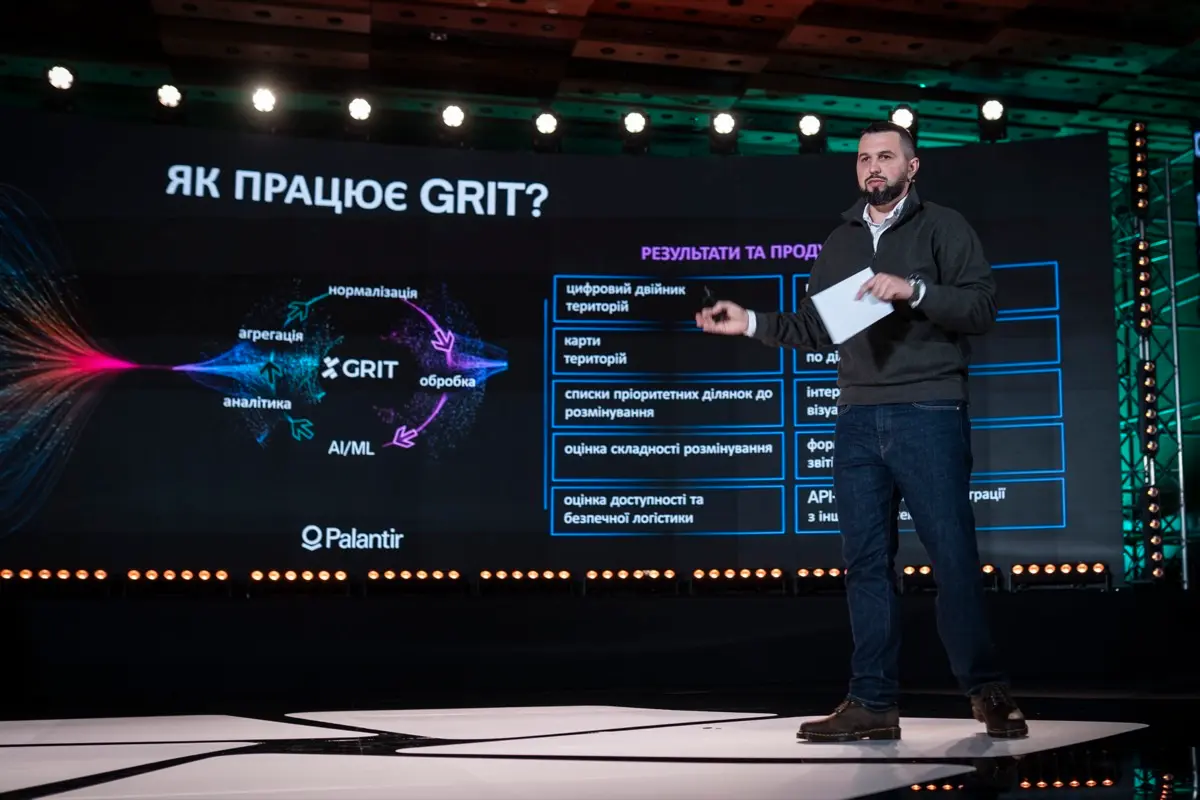
During this year's Forum, Deputy Minister of Economy, Environment and Agriculture of Ukraine Ihor Bezkaravainyi presented GRIT, the prioritization system in humanitarian demining, which operates on the platform of the tech giant Palantir. It consolidates and analyzes complex arrays of data and transforms them into management decisions. In particular, the creation of a digital twin of land plots (cadastres), taking into account information about contaminated and likely contaminated territories, allows seeing where small polygons of uncleared land block much larger areas that could be cultivated by farmers.
"GRIT does not change the mine action process, but makes it smarter, more precise, and more manageable. The IMAS (International Mine Action Standards) structure itself remains unchanged. We only strengthen these processes with high-quality analytics, planning, and monitoring in order to more efficiently allocate resources and make well-founded decisions," declared Ihor Bezkaravainyi.
Additionally, during the Demine Ukraine Forum, panel discussions were held to discuss the strategy for international support to Ukraine, investments in the humanitarian demining sector, and partnerships between the state and private mine action operators.
The Demine Ukraine Forum 2025 is organized by the Ministry of Economy, Environment and Agriculture of Ukraine jointly with the Centre for Humanitarian Demining, with the support of the UNDP and funding from the governments of Norway and the Netherlands.